









There's a moment when someone fills out a personalized song brief, gets to the box that says anything else?, and types four words that have ended a thousand otherwise-good songs:
Make it emotional.
The instruction is well-meaning, but it tells the songwriter exactly nothing. Every song you'd commission is going to be emotional — that's the whole reason you're commissioning a song instead of buying a card. Saying "make it emotional" is like telling a chef "make it tasty."
What the songwriter actually needs are specifics. Seven of them. Here's the field guide.
Why 'make it emotional' fails
The phrase fails for three reasons.
It tells the songwriter to add feelings rather than describe truths. When you ask for "emotion," what you usually get is sentimental language — adjectives, abstractions, big feelings stated directly. That kind of language slides off the listener. The listener already knows what you're trying to do. They're waiting for the song to prove it.
It removes specificity in favor of mood. A song built around a mood (sad, tender, hopeful) ends up being about the mood instead of the person. You'd rather have a song about Linda than a song about love.
It puts the work on the songwriter that should be on you. The brief is your half of the bargain. You know the person. The songwriter doesn't. Asking the songwriter to "make it emotional" without giving them what to make emotional about is asking them to imagine a person who doesn't exist.
So skip it. Replace it with the seven specifics below, and the song will be more emotional than you ever could have asked for.
The seven specifics that always land
These are the seven facts that show up — in some combination — in every personalized song that has worked. The minimum to write a great song is five. Six is excellent. All seven and the song writes itself.
1. Their full name (and what they go by)
First name, last name if relevant, what their family calls them, and any nickname. Real songs use real names. The first time their name lands in the chorus is when the listener stops scrolling.
2. The relationship — by length and dynamic
Not just 'my wife' but 'my wife of 14 years, second marriage for both of us, met on a Tuesday after work.' Length plus shape. The dynamic tells the songwriter what register to write in.
3. One specific story
One story. Not a montage. The Sunday they showed up. The trip you almost didn't take. The fight you laugh about now. One concrete story is worth ten general impressions.
4. Two physical details
Something you'd notice across a room. The way they tie their shoes. The color of a coat they wear all winter. The sound of their laugh. Songs love physical specifics because images live longer than feelings.
5. One thing they always say
A catchphrase. A family saying. A line they end every voicemail with. The line they say when you've done something stupid. Quoted material drops directly into verse two.
6. The thing you've never told them
This one is hard. Most great personalized songs build to one specific unspoken thing — a thank-you, an admission, a secret, a confession. Tell us what yours is. The bridge becomes that line, in someone else's voice.
7. The music style and one reference artist
Sub-genre plus one artist who feels close. 'Country folk like Jason Isbell' is a great reference. 'Pop' is not. Two references are even better — 'Brandi Carlile meets Norah Jones' tells the songwriter everything they need.
If the person you're commissioning the song for is someone you know well, all seven are usually accessible. If they're not — if you're stuck on three or four of these — that's a sign you don't know the person well enough for a personalized song to land. That's not a personal failure. It's information.
Three things to skip
The brief is as much about what you leave out as what you put in.
Skip 'make it emotional'
Every song you'd commission is going to be emotional. The word doesn't help. What you actually mean — sad, hopeful, bittersweet, funny-then-sad, defiant — is much more useful. Pick one of those instead.
Skip your own writing attempts
Lines you wrote almost always end up cut. Briefs are about what the song is about. If you have a line you love, paste it as inspiration but tell us you're not married to it.
Skip listing every quality of the person
'She's caring, kind, smart, funny, brave, supportive, loyal.' This is a Hallmark card, not a song. Pick three traits and connect them to specific stories. Adjective lists make for the worst songs.
How specific is too specific?
Most people under-specify. A few over-specify. Both fail differently.
Under-specifying means writing things like "she's the love of my life" or "my dad means the world to me." These are true and useless. They don't tell the songwriter anything they couldn't have guessed from the relationship label.
Over-specifying means giving the songwriter so much detail they can't choose. A 1,400-word brief with 23 stories is a brief where you're trying to write the song. The songwriter's whole skill is picking the right three details out of the ones you give them. Give them ~5 to 8 to choose from. Not 25.
The right size: 200–400 words, structured around the seven specifics, with one or two of the specifics broken out into a real story (not just a phrase).
A worked example: bad brief vs. good brief
Here's a brief we received last year that didn't work, and what the same person wrote in their second attempt.
Bad version (real):
My dad's birthday is coming up. He's turning 65 and I want to make him a song. He's a really great dad and I love him a lot. He always supported me. He's funny and kind. Make it emotional. Country style.
This produces a generic song. The songwriter has nothing to grip — no name, no city, no story.
Good version (the same person, second try):
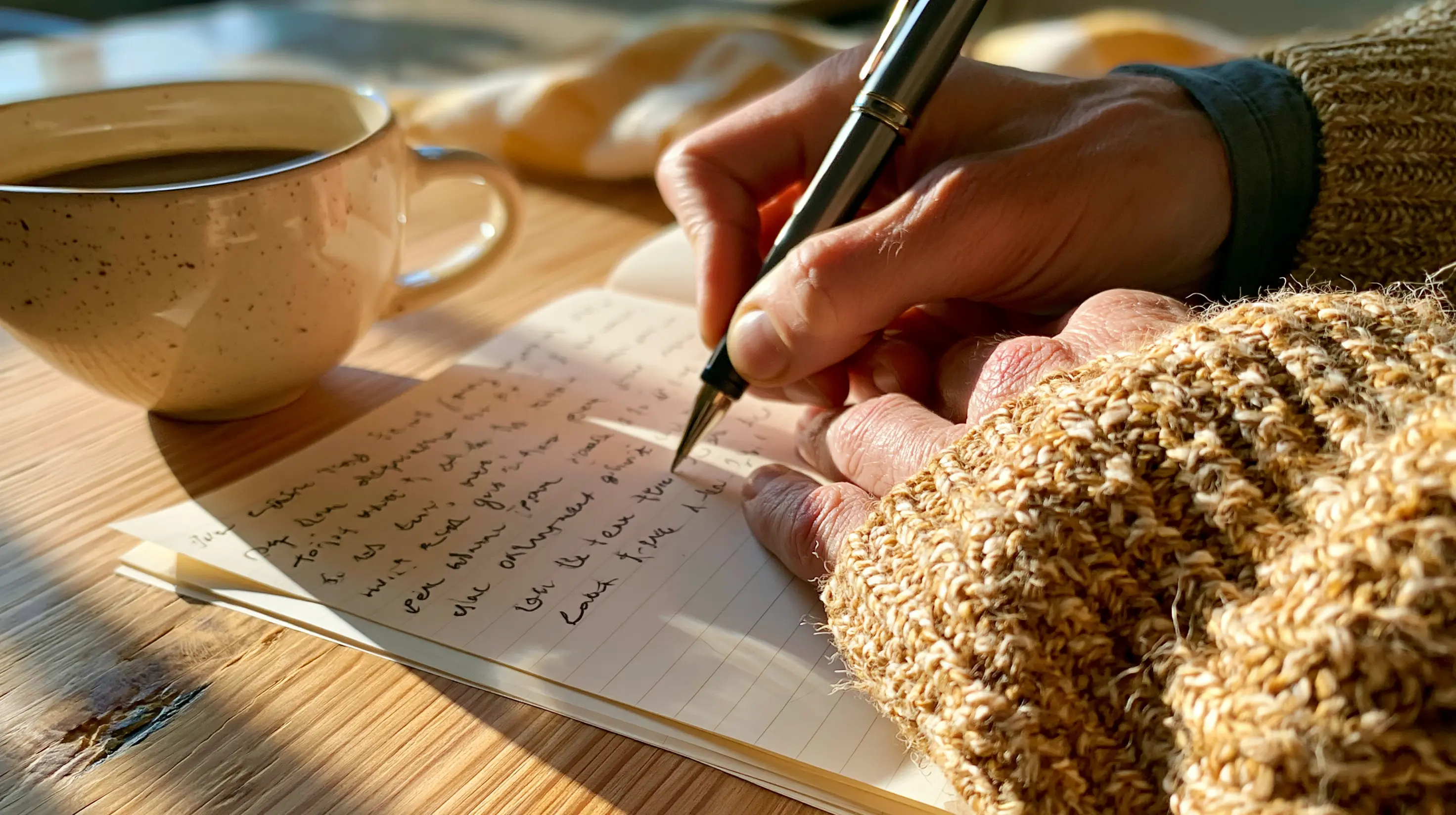
Dad turning 65 on June 12. Name: Robert (we call him "Pop"). Grew up in Chattanooga, moved to Charlotte in 1985 for work. Drove a UPS truck for 32 years, retired last spring. Married to mom (Linda) since 1983. One specific story: when I was 16 I crashed his truck and he didn't yell — he asked if I was hurt and then asked me to help fix it. Catchphrase: ends every phone call with "drive safe, kid." Physical detail: still wears the same denim jacket from the 90s. The thing I've never told him: thank you for not yelling that day. Style: classic country, like George Strait or Alan Jackson. Male vocal, slightly mature, steel guitar OK.
This produces a song that could only be about one specific 65-year-old man.
The first brief took 30 seconds. The second took 8 minutes. The 8 minutes is the entire difference between a forgettable song and one Pop will play on every drive for the rest of his life.
Example brief
“Anniversary song. Wife: Maria. Married 18 years. Two kids (Diego, 14; Sofia, 11). Met at a wedding in San Antonio in 2007 — she was the bride's sister, I was the groom's college friend. She's a pediatric nurse, works night shifts. Catchphrase: 'I'm not tired, I'm just resting my eyes' (always lying). Physical detail: she sings the same song to herself when she's stressed. The thing I've never said: I know the night shifts cost her, and I see it. Style: country folk, like Brandi Carlile or Patty Griffin. Female vocal. Mood: warm, grateful, with one funny line.”
Get a free song
You write a 5-minute brief, picking the seven specifics. We turn it into a real song, with real lyrics about a real person, recorded in your chosen style and delivered as MP3 in about 30 minutes.
10 free slots open every day at 10:00 AM EST. No credit card. Bring the seven specifics.
Skip 'make it emotional'. Bring the seven specifics.
Personalized song · Your style · MP3 in ~30 minutes
Get a free personalized song10 free slots daily · Resets at midnight EST
Questions about briefs
More birthday song ideas